Comments (Page 320)
Latest comments by Jurassic World fans on news, forum discussions and images!
thats what i thought too. but the site seems to contradicts itself
I do believe there's a male Rex that hangs out with Rexy in the T-Rex kingdom. Not sure if a mate or just a good friend, but pretty sure there's at least one other Rex in the T-Rex Kingdom.

^#SaveDippy
Still, a 90% complete Stegosaurus is AWESOME!
I spent too long on that website. If only Jurassic World was real...
(I'd totally get the Apex Predator package.)
Image isn't working. Try posting it to tinypic, photobucket or deviantart, then copy and paste the link.
I wouldn't be surprised if you can find the trailer on YouTube tomorrow morning.
Welcome to the forums.

Well, I'm convinced that it is Rexy now. Also, there probably is one or two other rexes with her, and like the others said, there are probably a couple in the nursery. It is also possible that there is still a wild rex in the off-limits area that Masrani could bring in if the need arises.
We also got information a little while back that said Microceratus would be in Triceratops Territory...
i agree. they have one in the paddock but there could also be one or two in the nursery. theres no way they dont have a quick back up plan considering how old she is now

I have a hard time believing there's only one Rex. It's probably their biggest attraction right? What if it suddenly died? They'd have to raise one from scratch. Maybe in the park there's one, but they had to have made more, just incase.
yep and theres only one which is somewhat dissapointing but its pretty exciting that is indeed rexy. have you read the gallimimus valley? apparently they have "invisible fence technollogy" which keeps them from mingling with other dinosaurs and leaving there zones. pretty cool
The site said the T-rex has been ruling the island for 25 years. It is Rexy!
Cool. I haven't really looked at the site, but the few times I have, it was interesting.
I'm sure there's a barrier of sorts. Like in the novel, moats and fences. Maybe there's a river that runs through the paddocks to the lagoon.
why would they put carnivores in with herbivores?
Interesting locations for some. I like it over all.
Alright. Shadow Rex is first. What shall be posted second?

Noah, please check your PM, and reply to the Staff.
Thanks-
I don't really like the location of the Baryonyx. :T Also, we saw a couple Apatosaurus in the Cretaceous Cruise.
Wow you are finding everything today aren't you?? thank you for posting this! It is very helpful.
Thanks for sharimg this! The stego looks young. And is it me or does the limbs look really thick?
NO!! They shouldn't move dippy for some lame, boring blue whale skeleton.
Thanks for sharing.

MR.HAPPY9097 - Shadow Rex, please! (*Jumps up and down excitedly*)
SILVER_FALCON - We can hope his passing was free of pain; transcending physical life is undoubtedly frightening enough without added suffering.
I love this shot because it feels like Jurassic Park. You could not confuse it with any other dinosaur flick. It has it's own identity.
My sympathies go out to him and his family. After having looked up CGD, I now understand what a painful death he must've had.
I thought you were leaving this site, I am releived.
^That's true. He'll see the movie is spirit. :)
Well, I've got to get back into writing FF then. I've got the descriptions down for Rex vs Sauro, but that's as far as I've gotten. Mostly because it has to tie in with Giga vs Abeli vs Achillo (I think, some raptor anyay).
FF For me! So excited, they all sound great and interesting, I am not fussed.
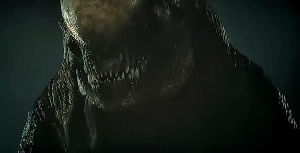
It looks extremely atmospheric! I like the direction in which I am seeing these images travel! :)
GOJIRA2K - Hahaha! Indeed! :)

good fight. rooting for giga/utahraptor/allosaurus, but i guess the outcome was expected. and if shadow and rex did have hatchlings... then we're all screwed.

I say Shadow Rex, I found it the most interesting!
Alright. Guess I'll get to work on Shadow Rex shortly.
As it stands, Shadow Rex is first, FF is second.
Hmmmmmmmmmmmmmmmmm................................................................
Gonna have to go with FF.
this thing is very real. for all those interested, here's the citation you can look up for the paper:
A large abelisauroid theropod dinosaur from the Early Cretaceous of Libya
JB Smith, MC Lamanna, AS Askar, KA Bergig… - Journal of …, 2010 - psjournals.org
some relevant sections
DISCUSSION
PRC.NF.1.21 clearly pertains to a ceratosaurian theropod, as evidenced by its possession of a proximolaterally-distomedially oriented tibiofibular crest on the femur (Carrano and Sampson, 2008) and tibial characters such as a hypertrophied cnemial crest (Rauhut, 2005), a lateral fossa, a fibular facet, and a craniocaudally compressed shaft (Sereno et al., 2004). Within Ceratosauria, the specimen is referable to Abelisauroidea because the lateral condyle of the tibia is confluent with the cnemial crest (Fig. 4.3; see Rauhut, 2003). Among abelisauroids, PRC.NF.1.21 may be referable to Abelisauridae because the poorly differentiated lateral tibial condyle is located at the same proximodistal level as is the medial condyle (Novas et al., 2004), but we cannot conclusively refer the specimen to this more exclusive abelisauroid clade at this time. Interestingly, the proximally bifurcate fibular crest of PRC.NF.1.21 appears unique to this specimen, indicating that the Libyan form probably pertains to a previously unrecognized genus or species. Nevertheless, we refrain from erecting a new taxon to receive the specimen pending the discovery of additional fossils or more conclusive character evidence. The discovery of PRC.NF.1.21 holds significant implications for understanding the evolution and paleobiogeography of abelisauroid theropods. Along with records from the Hauterivian-Barremian of Argentine Patagonia (Ligabueino andesi [Bonaparte, 1996] and an indeterminate form [Rauhut et al., 2003]), it represents one of the oldest known definitive occurrences of Abelisauroidea, providing further evidence for the origin of the clade prior to the final separation of Africa and South America (Lamanna et al., 2002; Rauhut et al., 2003; Sereno et al., 2004; Rauhut, 2005; Sereno and Brusatte, 2008), and raising the possibility that abelisauroids originated on this conjoined landmass (we concur with Carrano and Sampson [2008:236] and Xu et al. [2009:Supplementary Information] in regarding the recently described Early Jurassic theropod Berberosaurus Allain et al., 2007 as a non-abelisauroid theropod rather than as an abelisauroid as originally proposed). Furthermore, the occurrence of PRC.NF.1.21 predates, or is approximately contemporaneous with, most major events in Gondwanan fragmentation (A. G. Smith et al., 1994; Hay et al., 1999; Scotese, 2004; Blakey, 2008; Ali and Aitchison, 2009), thus supporting the hypothesis that abelisauroids could have radiated throughout the supercontinent before it broke apart (Lamanna et al., 2002; Sereno et al., 2004). Therefore, although the observed Late Cretaceous distribution of Abelisauroidea has previously been used in this context (see Sampson et al., 1998; Sereno et al., 2004), this distribution may actually be of limited utility in evaluating competing Gondwanan paleobiogeographic hypotheses, at least until low-level relationships within the clade are more conclusively resolved. When coupled with other recent discoveries from Libya (J. B. Smith and Dalla Vecchia, 2006), Morocco (Russell, 1996; Mahler, 2005; Novas et al., 2005a, and probably Buffetaut et al., 2005), Egypt (J. B. Smith and Lamanna, 2006; Carrano and Sampson, 2008), Niger (Sereno et al., 2004; Sereno and Brusatte, 2008), and Kenya (Sertich et al., 2006), PRC.NF.1.21 provides additional evidence that, rather than being rare or absent as had previously been considered (e.g., Sampson et al., 1998), abelisauroids were taxonomically diverse, geographically widespread, and temporally long-lived on the African mainland (see Sereno et al., 2004; Novas et al., 2005a; J. B. Smith and Lamanna, 2006). Finally, the considerable dimensions of PRC.NF.1.21 (Table 1), combined with the geological age of the specimen, demonstrate that at least one abelisauroid lineage achieved very large body size by the late Early Cretaceous (early Aptian). Indeed, the estimated dimensions of the Libyan form are comparable to those of many coeval spinosaurid and carcharodontosaurid tetanurans, casting doubt on previous hypotheses (Apestegu?´a, 2002; Candeiro and Martinelli, 2005; Novas et al., 2005b) that abelisauroids were ecologically subordinate to such theropods in Gondwanan paleoenvironments during the Early and middle Cretaceous."
anyway, the source material gave a rough( rough, mind you) estimation of TBL. that was 7,800 - 9,200mm. that translates to ~25.6ft - 30ft.
according to table one of the paper, the length estimation was calculated by by multiplying complete femoral length by (1/0.11)
so big, but not Tyrannosaurus big.